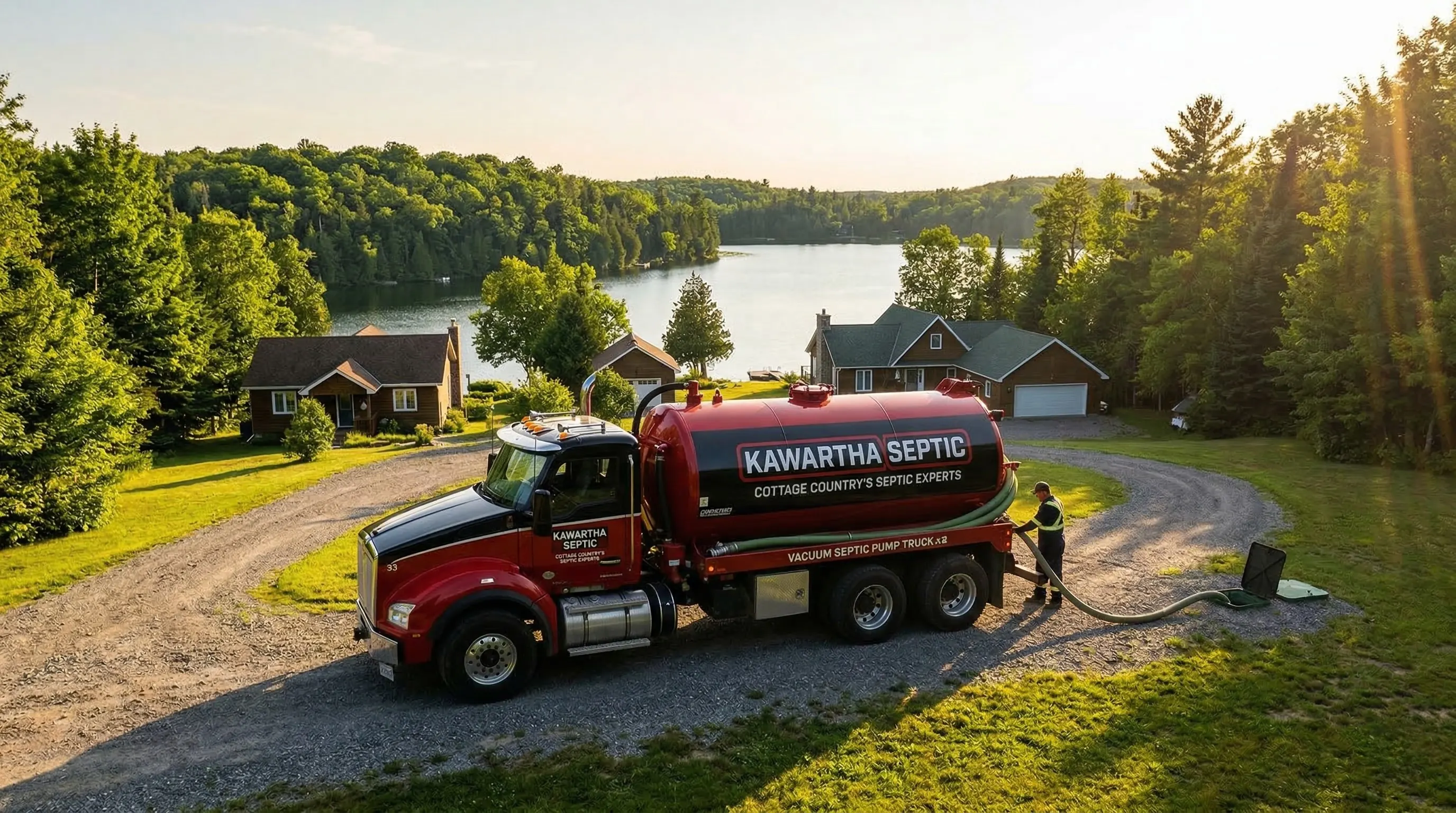
Last summer, a couple bought a cottage near Bobcaygeon. Beautiful spot on the lake. The kitchen was outdated, so they renovated. New counters, new sink, and a shiny new garburator under it. They used it every night. Chicken bones, potato peels, leftover pasta. Three months later, they called us because their yard smelled like a swamp and the drains weren’t moving.
Nobody told them their cottage ran on a septic system.
If you’re wondering whether you can use a garbage disposal with a septic tank, you’re not alone. It’s one of the most common questions we get from homeowners across Kawartha Lakes. And the answer isn’t a simple yes or no.
The Short Answer
Can you use a garbage disposal with a septic system? Technically, yes. Nothing will physically stop you from installing one. Some manufacturers even sell models labelled “septic safe.”
But “can” and “should” are very different words.
A garburator and septic tank can coexist. However, using one changes the math on how your system handles waste. It increases the load on your tank, speeds up how quickly solids accumulate, and puts more strain on your drain field. That means more frequent pumping, higher maintenance costs, and a greater chance of problems down the road.
If you already have one installed, don’t panic. There are ways to manage it. But if you’re thinking about adding one, you should know exactly what you’re signing up for.
What a Garbage Disposal Does to Your Septic
Your septic system works through a pretty straightforward process. Wastewater flows from your house into the tank. Solids settle to the bottom and form a sludge layer. Lighter materials float to the top as scum. The liquid in the middle flows out to the drain field where the soil filters it naturally.
Bacteria inside the tank break down those solids over time. That’s how the system stays balanced.
Here’s where the food waste septic system problem starts.
When you run a garburator, you’re grinding up food scraps into small particles and flushing them into your septic tank. Those particles are tiny, but they’re still solid waste. And your tank now has to process food waste on top of everything else that goes down your drains.
The food particles settle into the sludge layer and build up faster than bacteria can break them down. Fats and grease from food float to the scum layer and thicken it. Both layers grow quicker than they would in a system without a garbage disposal.
That creates a few real problems:
- Faster sludge buildup. The tank fills with solids much sooner than it normally would.
- Grease and fat accumulation. These don’t break down easily and clog things up.
- Solids reaching the drain field. If the sludge level gets too high, solid particles flow out with the effluent and clog the drain field. This is expensive to fix and sometimes means replacing the field entirely.
- Disrupted bacteria balance. The added load can overwhelm the bacteria that keep your tank working.
According to the U.S. Environmental Protection Agency, minimizing the use of garbage disposals is one of the key steps to maintaining a healthy septic system. The same principle applies here in Ontario.
If you’re noticing slow drains, gurgling pipes, or bad smells around your property, these could be signs your septic system is failing. A garburator that’s been running for months or years without adjusted maintenance might be the reason.
How Much Extra Pumping Will You Need?
Without a garbage disposal, most septic tanks in the Kawartha Lakes area need pumping every 3 to 5 years. That’s a general range for a typical household. The exact timing depends on tank size, household size, and water usage. You can read more about that in our guide on how often to pump your septic tank.
Add a garbage disposal into the mix and that timeline shrinks.
Industry data and our own experience show that regular garburator use can increase solids in your tank by 30% to 50%. That means you could be looking at pumping every 1.5 to 3 years instead.
Here’s a rough breakdown:
| Household Size | Without Garburator | With Regular Garburator Use |
|---|---|---|
| 1-2 people | Every 4-5 years | Every 2-3 years |
| 3-4 people | Every 3-4 years | Every 1.5-2.5 years |
| 5+ people | Every 2-3 years | Every 1-2 years |
That’s a lot of extra pumping. And pumping isn’t free. If you want to know what that costs in this area, check out our breakdown of septic pumping costs in Ontario.
Over 10 years, the extra pumping costs from using a garburator can easily add up to $2,000 to $4,000. And that’s assuming nothing goes wrong with your drain field.
If your system is already working hard, or if your tank is on the smaller side, a garburator just isn’t worth the risk. Call us at (705) 242-0330 and we can look at your setup and give you a straight answer.
If You’re Going to Use One: Rules to Follow
Some homeowners already have a garbage disposal installed and aren’t planning to remove it. Others have their reasons for wanting one. If that’s you, here are the ground rules to keep your septic system from paying the price.
1. Only grind small amounts of soft food waste. We’re talking about the scraps left on your plate after dinner. Not entire meals. Not bones. Not fibrous vegetables like celery or corn husks.
2. Always run cold water before, during, and after. Cold water keeps fats solid so they move through the pipes and into the tank rather than coating the insides of your plumbing. Run the water for 15 to 20 seconds after you turn off the disposal.
3. Never put grease, oil, or fat down the disposal. This is a rule for any drain, but it’s critical when you have a septic system. Grease doesn’t break down in the tank. It just builds up.
4. Use a septic-safe additive monthly. Some enzyme-based treatments can help your tank’s bacteria handle the extra load. They’re not a cure-all, but they help. Ask us which ones we recommend.
5. Increase your pumping frequency. Don’t wait for problems. If you’re using a garburator regularly, get your tank inspected and pumped more often. Our septic tank maintenance tips page covers this in more detail.
6. Get annual inspections. An inspection catches problems before they become emergencies. We service homes across Lindsay, Fenelon Falls, Coboconk, and the rest of Kawartha Lakes.
Better Alternatives to a Garbage Disposal
Here’s a story from a homeowner in Fenelon Falls that stuck with us. She’d been using a garburator for years. Pumping every 18 months. Spending more than she wanted to. When we told her the garburator was the reason, she switched to a countertop compost bin. Her pumping schedule went back to every 4 years. She told us she wished she’d done it sooner.
The truth is, there are better ways to handle food waste when you’re on a septic system.
Compost bin or pile. This is the simplest swap. Keep a small bin by the sink, empty it into a compost pile outside. Your garden benefits, and your septic system stays clean.
Countertop food waste collector. These sealed containers sit on your counter and hold a few days’ worth of scraps. No smell. Easy to empty into your green bin or compost.
Municipal green bin program. Many municipalities in Ontario offer curbside collection for organic waste. Check if your area is included.
Sink strainer or drain catch. A basic mesh strainer over your drain catches food particles before they go down the pipe. Costs a few dollars and saves you thousands in septic repairs.
None of these options put extra stress on your septic system. All of them are cheaper than the extra pumping and potential repairs that come with a garburator.
FAQ
Is a garbage disposal bad for a septic system?
It’s not great. A garbage disposal increases the amount of solids your septic tank has to process. That leads to faster sludge buildup, more frequent pumping, and a higher risk of drain field problems. It won’t instantly destroy your system, but it shortens its lifespan and raises your maintenance costs.
Can I use a “septic-safe” garbage disposal?
Some models are marketed as septic-safe because they grind food into finer particles. Finer particles are easier for bacteria to break down, but they’re still additional solids entering your tank. A septic-safe model is better than a standard one, but it doesn’t eliminate the extra load on your system. You’ll still need to pump more often.
What should I never put in a garbage disposal if I have septic?
Avoid bones, coffee grounds, eggshells, pasta, rice, fibrous vegetables (celery, corn husks, onion skins), grease, oil, and fat. These items either don’t break down well in a septic tank or cause clogs in the pipes leading to it. Stick to small amounts of soft food scraps only.
How do I know if my garbage disposal is causing septic problems?
Watch for slow-draining sinks, gurgling sounds in the plumbing, sewage odours in your yard or basement, and standing water near the drain field. If you’re experiencing any of these, your system might be struggling with the extra load. Book a septic inspection and we’ll find the source of the problem.
The Bottom Line
A garbage disposal and septic system can work together. But it’s a trade-off. More convenience in the kitchen means more maintenance, more pumping, and more risk for your septic system.
For most homeowners in the Kawartha Lakes area, the math doesn’t add up. The extra costs and risks outweigh the convenience of grinding food scraps down the drain.
If you’ve got a garburator and you’re not sure what it’s doing to your system, we can help. We inspect, pump, and maintain septic systems across Kawartha Lakes, Lindsay, Bobcaygeon, Fenelon Falls, and Coboconk.
Call us at (705) 242-0330 or book online to get your system checked. It takes less time than dealing with a failed drain field.