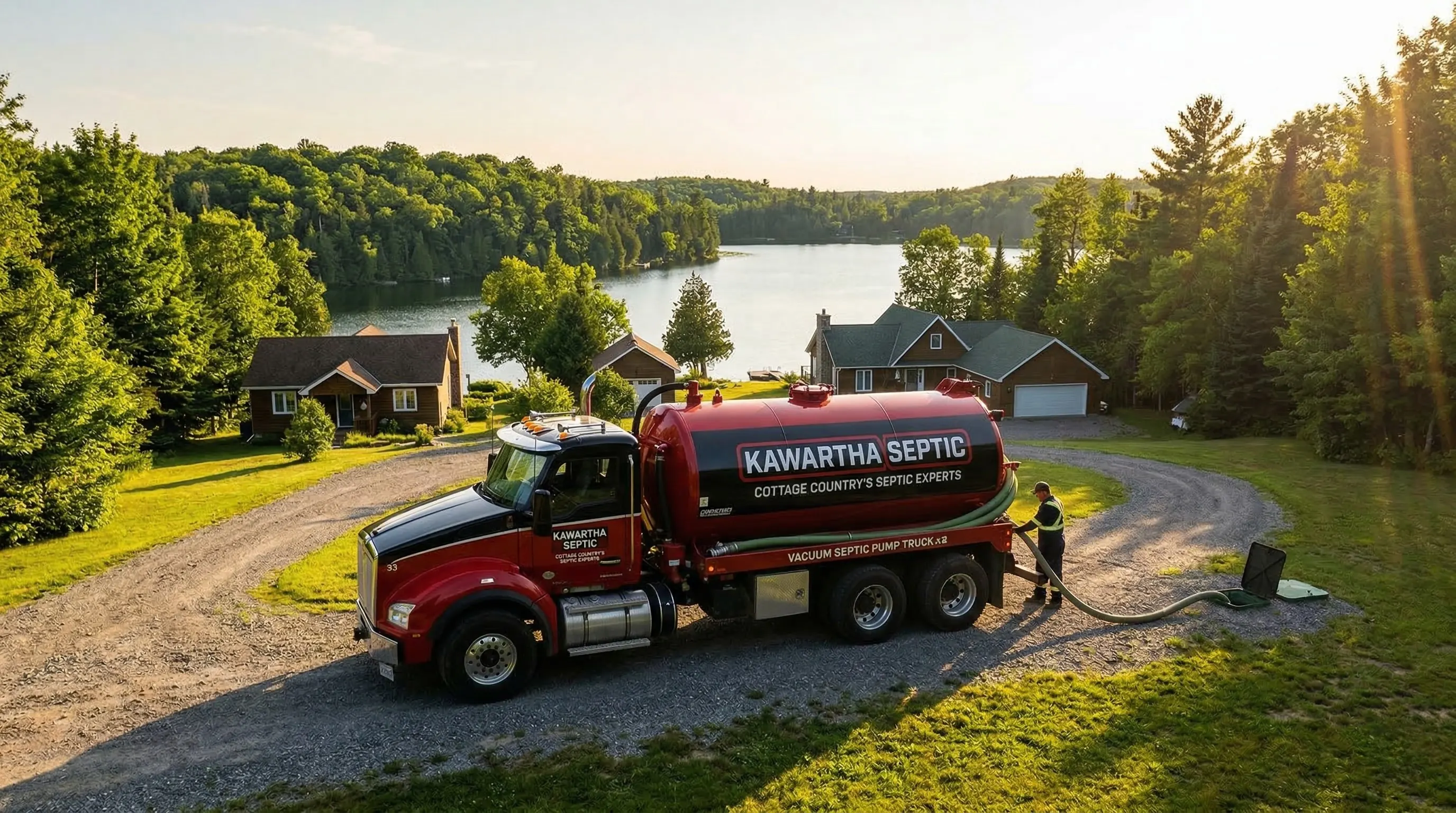
Yes, two cottages can share one septic system in Ontario. But the answer changes depending on whether they’re on the same lot or two separate lots, and that distinction is the difference between a $2,000 permit conversation and a $20,000 redesign.
Around Bobcaygeon, Coboconk, and the lakefronts of Sturgeon Lake and Pigeon Lake, we get this question almost every spring. A family inherited a cottage. A sibling wants to put up a guest cottage on the same lot. Or the original property got severed years ago and the other cottage is technically next door. Or someone wants to add a “bunkie” with a real bathroom for grown-up kids visiting on weekends.
Ontario’s rules accommodate all of these. They just expect you to do it correctly. Here’s what that looks like.
The Quick Answer: Same Lot vs. Separate Lots
| Configuration | Allowed? | What you need |
|---|---|---|
| Two cottages, same lot, same owner | Yes | One septic permit covering combined load (sized to total bedrooms) |
| Two cottages, same lot, different owners (e. g., condo, life estate) | Yes, with conditions | Permit + cost-sharing agreement + access provisions |
| Two cottages on separate lots, common septic | Yes, but documentation-heavy | Permit + registered easement + cost-sharing agreement on title |
| Adding a bunkie or guest cottage with plumbing on existing system | Maybe | Depends on existing system capacity; often requires upgrade |
| Informal shared system with no permit reflecting both buildings | No (technically illegal) | Retroactive permitting + likely upgrade to current code |
The shorthand: if both cottages are owned by the same person on the same lot, the permitting is straightforward but the sizing matters. If ownership is split, you’ve moved into the world of shared septic systems generally, with all the legal complexity that comes with it.
Same Lot, Same Owner: The Sizing Question
If you own one waterfront lot with a main cottage and want to add a guest cottage (or are looking at a property that already has both), the legal question is simple: are both buildings on a single permit, and is that permit sized for the combined load?
Ontario’s OBC Part 8 sizes septic systems based on the number of bedrooms in all the buildings the system serves. A three-bedroom main cottage plus a two-bedroom guest cottage equals a five-bedroom load. The system has to be sized for five.
If your existing system was sized for the original three bedrooms, adding a guest cottage typically requires:
- A site visit by a licensed sewage system designer to assess current capacity.
- A perc test if the original tests are missing or too old.
- A permit amendment or new permit reflecting the combined load.
- An upgrade to the system if the existing capacity is inadequate. Usually a larger tank, sometimes a larger or supplementary leaching bed.
The cost of upgrading varies dramatically:
- Tank upsize only (system has spare bed capacity): $4,000–$8,000
- Tank + bed expansion: $10,000–$20,000
- Full new system on the new building: $20,000–$45,000+ depending on soil
- Tertiary treatment system to fit the combined load on a constrained lot: $30,000+
The most common surprise: people assume “the system is fine, we’ll just hook the new bunkie into it.” Sometimes that’s true. Often it isn’t. The tank capacity may be marginal already, and adding a bunkie with a flush toilet pushes it over.
Bunkies and Guest Cottages: Where the Sizing Trap Lives
Cottage country is full of bunkies. Most of them have one or both of:
- A composting toilet (no septic connection)
- An outdoor sink draining to a pit (informal greywater)
Both of those are usually fine under existing rules and don’t trigger any septic redesign. The system class on the main cottage stays the same.
The trap kicks in when an owner upgrades the bunkie. Suddenly there’s a flush toilet, a real shower, and a kitchen sink draining indoors. That bunkie is now generating sewage and greywater, and OBC rules require it to be connected to a properly sized septic system. The “we’ll just run a pipe to the existing tank” approach is technically illegal if no permit reflects the combined load.
A homeowner near Coboconk we worked with two summers ago had inherited a 1980s lakefront cottage with a tiny “guest house” that was originally a tool shed. The previous owner had quietly converted it to a one-bedroom guest cottage with a real bathroom, plumbed informally into the main cottage’s tank. No permit, no design review. The system handled it for 15 years. Then the buyer’s lawyer found the discrepancy during a sale, and the seller had to fund a full redesign and bring the system to combined-load compliance before closing. Final bill: $24,000 he wasn’t expecting.
The lesson: if you’re adding plumbing to a secondary structure, get the permit conversation started before you connect anything. Retroactive compliance is always more expensive than doing it right the first time.
Separate Lots, Shared System: Document Everything
When two cottages are on different lots, typically the result of a historic severance, sharing a septic is legal but requires real paperwork:
- Registered easement on title. The lot hosting the system grants the other lot the right to use it and access it for service. Permanent, runs with the land.
- Maintenance and cost-sharing agreement. Who pays what for pumping, repairs, replacement.
- Original permit reflecting combined load. Or a permit amendment if both buildings weren’t on the original.
- Access provisions for service vehicles, including a defined route.
Without these, you have an informal arrangement that will surface as a problem at the next sale, refinance, or insurance review. We covered the broader playbook in our shared septic systems for buyers article, the same legal architecture applies whether the shared buildings are full homes or two cottages.
Capacity Reality for Shared Cottages
Here’s where shared cottage systems often fail in practice: peak load.
A three-bedroom main cottage plus a two-bedroom guest cottage is rated for five bedrooms of normal residential use. That sizing assumes the cottages run at typical occupancy with normal water habits.
Now consider a real cottage weekend:
- 16 family members across both cottages for a long weekend
- 3 showers running Sunday morning
- 2 toilets in active use
- Dishwasher and laundry going
- Maybe a hot tub being drained
That’s five-bedroom peak use slammed into a five-bedroom daily average system. The tank can fill faster than it can dispose of effluent, the effluent filter can choke up, the bed can saturate, and Sunday brunch becomes a sewage emergency.
We’ve covered this scenario in detail in our cottage party septic system guide. The mitigations are:
- Pump before known high-use weekends
- Stagger water-heavy activities (don’t run laundry while three showers are going)
- Make sure the filter has been cleaned recently
- Know where the tank lid is in case you need emergency service
Shared cottage systems amplify all of these issues because the combined buildings can hit peak load more often and more dramatically than a single cottage would.
When One Cottage Starts Renting
This is the most common cause of trouble we see in shared cottage arrangements: one owner starts renting their cottage on Airbnb or VRBO while the other doesn’t.
The renter cottage suddenly sees:
- Heavier and more variable use (large family groups every weekend)
- People who don’t know what shouldn’t go down a septic drain
- Back-to-back bookings with no rest period for the system
The shared tank takes the hit. The non-renting owner pays the same percentage of pumping and repair costs but is shouldering disproportionate wear from the other cottage’s commercial use.
If you’re in this situation:
- The cost-sharing agreement should reflect actual use, not equal shares. Renegotiate.
- The renting cottage owner should pay for more frequent pumping (typical schedule for rentals is annual or even more often).
- A clear “septic-safe products” guide should go to every guest.
- Both owners should consider whether the shared system is still the right architecture, or whether it’s time to split into two systems.
A clear written agreement before either cottage starts renting prevents most of these conflicts. Trying to work it out after commercial use has already created wear-and-tear damage gets ugly fast.
Inheritance: The Quiet Time Bomb
A lot of shared cottage septic situations begin with inheritance. Three siblings inherit Mom and Dad’s lakefront. Two cottages on one lot, originally one family, now three legal owners on a property that hasn’t been formally severed.
What was a non-issue when one family used both cottages becomes a question of:
- Whose responsibility is the septic?
- Who pays for what?
- What happens if one sibling sells their share?
- What happens if one sibling wants to renovate and trigger an upgrade?
Most of these situations resolve fine because the family is working in good faith. Some don’t. The ones that don’t usually involve no written agreement, divergent income levels among siblings, and a major repair bill that nobody planned for. (If you’re considering buying out siblings or buying into a compound, the diligence checklist in our buying a cottage with a septic system guide applies.)
If you’re managing an inherited cottage with a shared septic across multiple owners, the cheapest preventive maintenance is a written agreement among the parties, even if it’s just a one-page document that says “we split costs equally and pump every two years.” Lawyers can formalize that for $1,000–$2,000. The cost of not having one becomes obvious during the first major dispute.
What to Do Before Adding a Second Cottage
If you’re considering adding a guest cottage, second cottage, or bunkie with full plumbing to an existing septic system:
- Locate the original septic permit. It tells you the design capacity and bed configuration.
- Get a current septic inspection to know the system’s real condition.
- Calculate the combined bedroom count, main cottage + addition.
- Talk to a licensed sewage system designer. They’ll tell you whether the existing system can absorb the new load or whether an upgrade is required.
- Get cost estimates for the upgrade scenario before you finalize the new building’s design. Sometimes a smaller bunkie design (composting toilet only) avoids the upgrade entirely.
- Apply for the permit amendment or new permit before construction starts on the new building. Building inspectors will want this in place.
- If ownership is split or will be, get the easement and cost-sharing agreement drafted and registered before move-in.
Doing the work in this order prevents most of the expensive surprises we see.
Two-Cottage Septic FAQ
Can I just plumb my new bunkie into the existing tank without a permit? Technically illegal under OBC Part 8. Practically, building inspectors and future buyers’ lawyers find these unpermitted connections regularly. The permit cost is small. The cost of getting caught is large.
What’s the maximum number of bedrooms one Ontario septic can serve? There’s no fixed maximum, but systems above 9–10 bedrooms typically move from “Class 4 conventional” into commercial-scale design with different rules. Most cottage compounds stay below this threshold.
Does each cottage need its own water meter or sub-metering? For septic permitting, no. For cost-sharing fairness when one cottage uses more, sometimes yes, sub-meters can document actual use and resolve disputes.
What if my cottages are both seasonal and lightly used? Lighter use extends system life, but the design still has to be sized for combined peak. You can’t get a smaller permit because the system is sometimes off.
Can I add a Class 5 holding tank to a second cottage instead of expanding the main system? Possibly. Class 5 holding tanks work for low-volume secondary buildings on tight sites, but the ongoing pumping cost adds up fast. Crunch the numbers before assuming this is the cheap path.
My neighbour and I share a septic informally. Should we formalize? Yes, before either property changes hands. Formalization costs $1,500–$3,000. Not formalizing can cost a deal.
Is there a difference between a seasonal cottage and year-round cottage for shared system rules? Same OBC rules apply, but year-round use generates more annual flow and ages the bed faster. Sizing and maintenance schedules should reflect that.
Two Cottages, One System: Done Right or Done Costly
Shared cottage septics aren’t inherently risky. They’re just often built or maintained casually, and the casual approach is what creates the expensive failures.
Done right, with proper sizing, current permits, registered agreements, and consistent maintenance, a shared cottage system can run trouble-free for decades and deliver real cost savings versus two separate systems. Done casually, it becomes a liability that shows up at sale, at refinance, or in the middle of a Sunday morning family weekend.
We service the Kawartha Lakes region, Lindsay, Bobcaygeon, Fenelon Falls, Coboconk, and surrounding rural and waterfront properties. We can inspect a shared cottage system, identify whether it’s sized for actual use, and flag any compliance gaps before they become deal-killers. We don’t draft easements (lawyer’s job), but we’ll give you the technical picture they need.
Adding a cottage or buying a compound? Call (705) 242-0330 or book online. Use the cost calculator for a 60-second estimate.