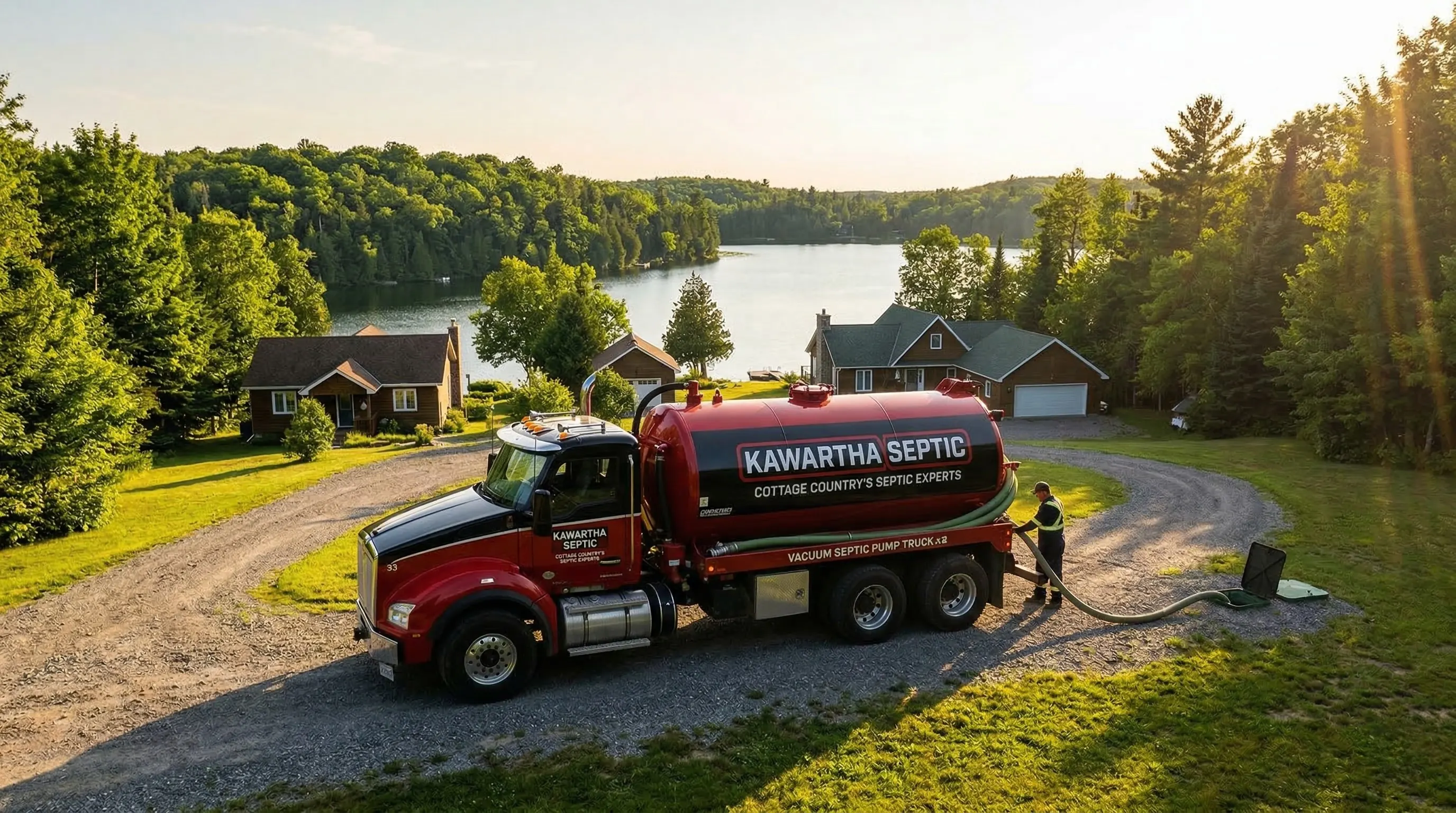
A few summers ago, a family on Sturgeon Lake noticed something wrong. The water near their dock had turned a murky green. Thick mats of algae clung to the shoreline. Their kids couldn’t swim. Their dog wouldn’t drink from the lake. When the health unit investigated the area, they traced a major contributing factor back to three failing septic systems on the same stretch of road.
It wasn’t dramatic. Nobody dumped anything illegal. The systems just hadn’t been maintained. And the lake paid the price.
If you live on or near a lake in Kawartha Lakes, your septic system and water quality are directly connected. What goes into your tank doesn’t just disappear. It goes somewhere. And in a region built around lakes, where that “somewhere” ends up matters more than most people realize.
How Your Septic System Affects Water Quality
A properly working septic system is actually a pretty good piece of engineering. Wastewater flows from your home into the tank, where solids settle and bacteria break down organic matter. The liquid effluent then moves out to the drain field, where soil naturally filters out harmful bacteria, viruses, and nutrients before the water reaches the groundwater table.
When everything works as it should, your system treats wastewater effectively and the environmental impact is minimal.
But when things go wrong, the consequences hit the water fast.
A failing system can release untreated or partially treated sewage directly into the ground. That contaminated water doesn’t stay put. It migrates through soil and rock, following the path of least resistance. In the Kawartha Lakes region, that path almost always leads to a lake, a river, or a well.
The signs of a failing system aren’t always obvious from the surface. You might not see sewage bubbling up in your yard. But below ground, a cracked tank, a clogged drain field, or a system that’s simply past its lifespan can be silently releasing contaminants into the environment for years.
That’s why septic pollution in lakes is such a tricky problem. It’s invisible until it’s not.
The Phosphorus Problem in Kawartha Lakes
Of all the contaminants that failing septic systems release, phosphorus is the one that causes the most visible damage to our lakes.
Here’s how it works. Phosphorus is a nutrient that occurs naturally in human waste. A healthy drain field and the surrounding soil normally absorb most of it before it reaches any waterway. But when a system fails, or when too many systems are packed into a small shoreline area, phosphorus leaks through in concentrations the ecosystem can’t handle.
Even small amounts of excess phosphorus trigger explosive algae growth. We’re talking about the blue-green algae blooms that have become more and more common across the Kawarthas in recent years. These blooms aren’t just ugly. They produce toxins that can make people and pets sick. They reduce oxygen levels in the water, stressing fish populations. And once a lake tips toward nutrient overload, it’s incredibly hard to reverse.
The Kawartha Conservation Authority has identified aging and failing septic systems as one of the leading sources of phosphorus loading in local watersheds. It’s not the only source. Agricultural runoff and stormwater play a role too. But residential septic systems along the shoreline are a factor that every homeowner can actually control.
The frustrating part? A single neglected system can undo the efforts of an entire neighbourhood trying to protect their lake.
Septic Systems and Well Water Safety
Lake contamination gets the most attention, but well water septic contamination is an equally serious concern for rural Kawartha Lakes property owners.
Many homes in the region, especially around Lindsay, Coboconk, and other rural communities, rely on private wells for drinking water. If your septic system is leaking, the same pathogens and chemicals that threaten the lake can end up in your drinking water supply.
We talked to a homeowner near Coboconk who started getting recurring E. coli hits on his well water tests. He replaced the well pump. He had the well cap inspected. Nothing fixed it. It wasn’t until a septic inspection revealed a deteriorated drain field that the source was identified. His own septic system had been contaminating his own drinking water for over a year.
Bacteria like E. coli, nitrates, and pharmaceutical residues can all travel from a compromised septic system to a nearby well. The risk increases when the well is downhill from the drain field, when the soil is thin over bedrock (common in parts of the Kawarthas), or when the system and well are too close together.
Ontario’s septic system guidelines set minimum distances between septic components and wells, but many older properties were built before those standards existed. If your system and well are on the same property and you haven’t tested your water recently, it’s worth doing.
Lake-by-Lake Concerns in the Kawarthas
Not every lake faces the same risks, but no lake in the region is immune. Here’s what we’re seeing across the Kawarthas.
Sturgeon Lake
Sturgeon Lake has been one of the hardest hit by blue-green algae blooms in recent years. It’s a large, shallow lake with heavy cottage and residential density along the shoreline. Many of the septic systems on Sturgeon Lake date back to the 1960s and 70s. That puts them well beyond their expected lifespan. The combination of aging systems, high usage during summer months, and the lake’s shallow depth creates a perfect storm for nutrient loading.
Cameron Lake
Cameron Lake is smaller and deeper, which gives it some natural resilience. But development has increased steadily, and with more homes converting from seasonal to year-round use, septic systems that were designed for weekend cottage use are now handling full-time loads. That mismatch accelerates wear and increases the risk of failure.
Balsam Lake
Balsam Lake benefits from better water flow through the Trent-Severn system, which helps flush nutrients. But pockets of dense shoreline development, particularly on the south shore, still create localized water quality concerns tied to septic system discharge.
Pigeon Lake
Pigeon Lake sits downstream of several other lakes in the chain, which means it receives cumulative nutrient inputs. Septic systems around Bobcaygeon and along the Pigeon Lake shoreline contribute to phosphorus levels that are already elevated from upstream sources. Protecting Pigeon Lake from further septic pollution is critical because the lake is already under stress.
Each of these lakes is worth protecting. And in every case, the condition of shoreline septic systems plays a direct role in the lake’s health.
What You Can Do to Protect Water Quality
Protecting lake water from septic contamination doesn’t require heroics. It requires consistent, basic maintenance. Here’s what makes the biggest difference.
Pump Your Tank on Schedule
This is the single most important thing you can do. When your tank gets too full, solids escape into the drain field and clog it. A clogged drain field doesn’t filter properly, and nutrients and bacteria pass straight through to the groundwater. For most households, pumping every 3 to 5 years keeps the system working effectively. Cottages with seasonal use may have different needs. Check our guide on how often to pump your septic tank for more detail.
Watch What Goes Down the Drain
Harsh chemicals, antibacterial soaps, and excessive amounts of household cleaners can kill the beneficial bacteria in your tank that break down waste. Without those bacteria, solids accumulate faster and the treatment process breaks down. Stick to septic-safe products when you can.
Reduce Water Volume
Every extra gallon of water that enters your system pushes effluent through the drain field faster, giving soil less time to filter it. Fix leaky faucets. Space out laundry loads. Consider low-flow fixtures. These small changes reduce hydraulic stress on the system.
Protect Your Drain Field
Don’t park vehicles on it. Don’t plant trees near it. Don’t build over it. The drain field is where the real treatment happens, and compacting or damaging the soil ruins its ability to filter contaminants. Learn more about how your drain field works and how to keep it functioning properly.
Get Regular Inspections
A professional inspection can catch problems before they become expensive failures and environmental hazards. If your system is more than 20 years old, on a waterfront property, or showing any warning signs, an inspection is a smart move.
Follow a Maintenance Routine
The best protection for your lake is a well-maintained septic system. Our septic tank maintenance guide walks through everything you need to stay on top of it.
Ready to make sure your system isn’t hurting the lake? Book a septic inspection or pumping service today or call us at (705) 242-0330. We serve the entire Kawartha Lakes region, including Lindsay, Bobcaygeon, Fenelon Falls, and Coboconk.
Frequently Asked Questions
Can a failing septic system contaminate a lake?
Yes. When a septic system fails, untreated wastewater can seep through the ground and reach nearby lakes, rivers, or streams. The most common contaminants include phosphorus, nitrogen, bacteria, and viruses. Phosphorus is the biggest concern in the Kawarthas because it fuels harmful algae blooms that degrade water quality and can produce toxins dangerous to people and pets.
How far does septic contamination travel?
It depends on soil type, depth to bedrock, slope, and water table height. In areas with thin soil over Canadian Shield rock, which is common in parts of the Kawarthas, contamination can travel significant distances relatively quickly. Some studies have documented nutrient plumes extending 50 metres or more from a failing drain field. Properties close to the shoreline are at the highest risk of contributing to lake pollution.
How do I know if my septic system is affecting my well water?
The only reliable way is to test your well water. Have it tested for bacteria (total coliform and E. coli), nitrates, and nitrites at minimum. If your results come back positive for any of these, your septic system is one of the first things to investigate, especially if the system is older, hasn’t been maintained, or is located uphill from your well.
What’s the most important thing I can do to protect my lake from septic pollution?
Keep your system maintained. That means pumping on schedule, watching for signs of failure, protecting your drain field, and getting a professional inspection if your system is aging. A well-maintained septic system treats wastewater effectively and poses minimal risk to surrounding water. A neglected one can be silently polluting for years.
Your Lake Depends on Your Septic System
We live and work in the Kawarthas because of the lakes. They’re why people buy cottages here, raise families here, and retire here. But the lakes aren’t going to stay healthy on their own. Every septic system along every shoreline plays a part.
The good news is that protecting lake water quality from septic contamination is entirely doable. It doesn’t take expensive technology or complicated upgrades. It takes awareness, maintenance, and a willingness to treat your septic system like the piece of critical infrastructure it actually is.
If it’s been a while since your system was inspected or pumped, don’t wait for a problem to show up. The damage that happens underground and underwater is the kind you don’t see until it’s too late.
Give us a call at (705) 242-0330 or book online. We’ll help you make sure your system is protecting your property, your water, and your lake.