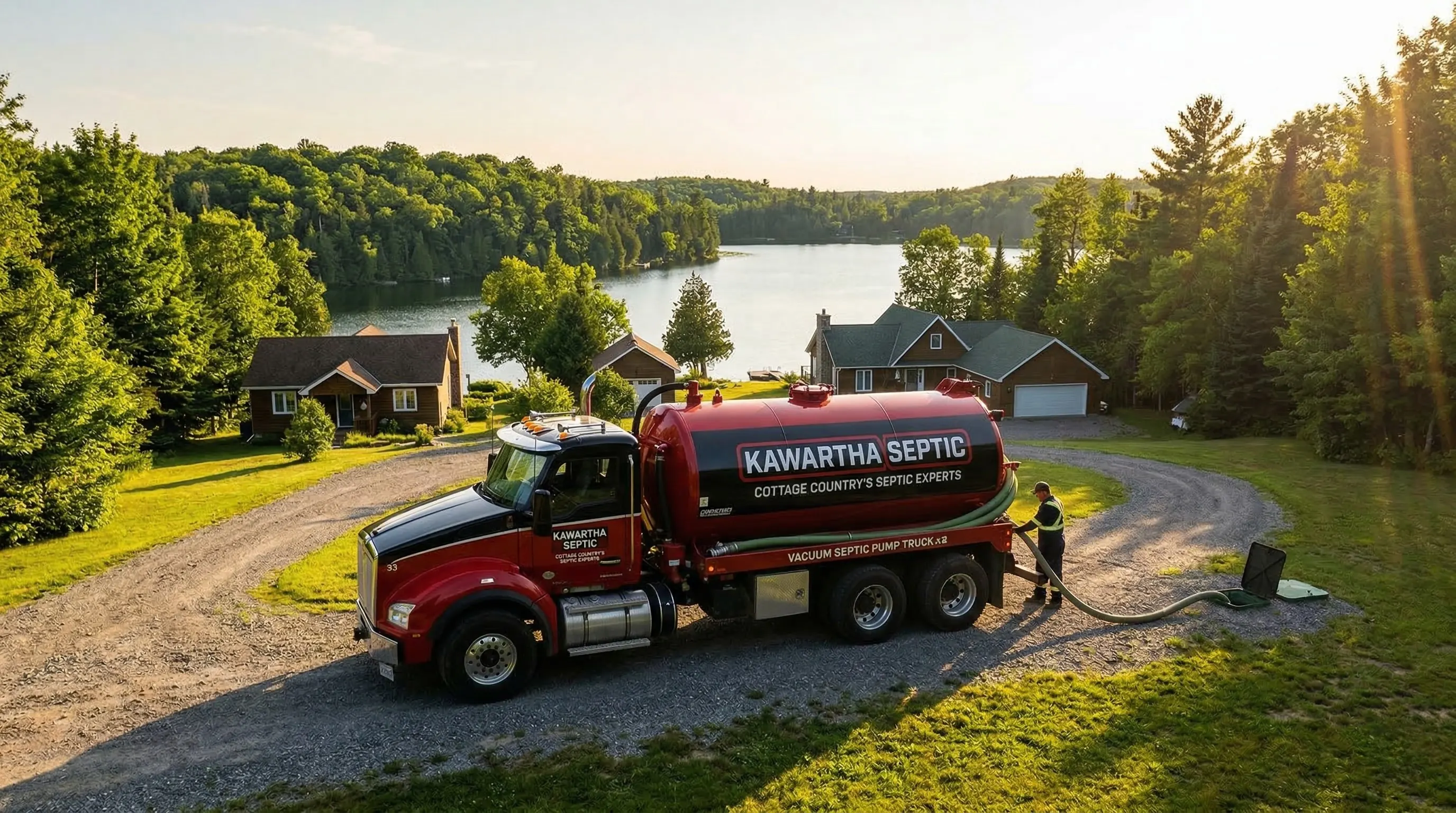
Picture this. A septic technician shows up at your property in Lindsay for a routine pump-out. Should be quick, right? Except nobody knows exactly where the tank lid is. The previous owner didn’t leave a map. The yard has been landscaped twice since the system went in. So the tech spends 45 minutes probing the ground with a metal rod, then another 20 minutes digging through two feet of soil and roots to uncover the lid.
You’re paying for every minute of that.
This is exactly the kind of headache that septic tank risers eliminate. If you’ve never heard of them, or you’re wondering whether they’re worth the money, keep reading. We’ll break down what they are, what they cost, and why most homeowners across Kawartha Lakes should seriously consider getting one installed.
What Is a Septic Riser?
A septic riser is a pipe or cylinder that extends from the lid of your buried septic tank up to ground level. It’s capped with a secure, watertight lid that sits flush with or just above the surface of your lawn.
Think of it as a permanent access point. Instead of digging down every time someone needs to open the tank, the riser brings the opening right to the surface. The riser itself is typically 12 to 24 inches in diameter and can be as tall as needed to bridge the gap between your tank lid and ground level. Most tanks in our area sit 1 to 3 feet underground.
That’s it. It’s not complicated technology. It’s a simple upgrade that makes every future interaction with your septic system faster and cheaper.
Why You Need a Septic Tank Riser
The septic riser benefits are practical and immediate. Here’s why they matter.
It Saves You Money on Every Pump-Out
Every time your tank gets pumped, someone has to find the lid and dig down to it. Most septic companies charge extra for that labour. We’re talking $100 to $200 in digging fees on top of the standard pumping cost. If you’re pumping every 3 to 5 years like you should be, those fees add up fast.
With a riser in place, the tech pulls up, pops the lid, drops the hose in, and gets to work. No shovel required. The riser pays for itself after one or two pump-outs.
It Makes Inspections Quick and Easy
Ontario’s septic system regulations require inspections for real estate transactions, and many municipalities in the Kawartha Lakes region are tightening up on maintenance requirements. When an inspector needs to look inside your tank, a riser turns a 90-minute ordeal into a 10-minute job.
We had a customer in Bobcaygeon last year who was selling her cottage. The home inspection was scheduled for a Thursday. On Tuesday, she realized nobody had ever located the septic lid. She called us in a panic. We found the tank, pumped it, and installed a riser the same visit. The inspector came Thursday, popped the lid, did his check in under 15 minutes, and signed off. If we hadn’t installed that riser, the inspection would have been a nightmare with the buyer’s inspector standing around watching someone dig.
It Encourages Regular Maintenance
Here’s the thing about buried lids. When it’s a hassle to access your tank, you put off maintenance. You skip the pump-out. You don’t bother with inspections. And then one day you’ve got sewage backing up into your basement or a failed drain field that costs $20,000 to replace.
A riser removes the friction. When it’s easy to check on your system, you actually do it. That’s one of the biggest septic tank maintenance tips we can give anyone.
It Helps You Find Your Tank
If you’ve ever struggled with how to find your septic tank, you know the frustration. A riser solves that problem permanently. Once it’s installed, you always know exactly where the access point is.
Ready to stop paying digging fees? Call us at (705) 242-0330 or book online. We install risers across Kawartha Lakes, Lindsay, Bobcaygeon, Fenelon Falls, and Coboconk.
How Much Does a Septic Tank Riser Cost?
Let’s talk numbers. Septic tank riser cost depends on a few things: the depth of your tank, the material you choose, and the diameter you need.
Here’s a general breakdown for our area:
- Riser kit (materials only): $150 to $400
- Professional installation: $150 to $350
- Total installed cost: $300 to $700
If your tank is deeper than average or the soil conditions are tough (lots of rock or roots), you might land on the higher end. If the tech is already on-site for a pump-out and your tank lid is exposed, installation can be done at the same time for less.
Compare that to $100 to $200 in digging fees every single pump-out. Over 15 to 20 years, a riser saves you $500 to $1,500 or more. It’s one of the cheapest upgrades you can make to a septic system, and it pays for itself.
Septic Riser Materials: Concrete vs. Plastic
You’ve got two main options when it comes to septic tank lid riser materials. Each has its pros and cons.
Concrete Risers
Concrete risers are the old-school option. They’re heavy, durable, and have been used for decades. They come in precast rings that stack on top of each other to reach ground level.
Pros:
- Very strong and heavy (won’t shift)
- Long lifespan
- Good match if your tank is already concrete
Cons:
- Heavy and harder to install (often need equipment)
- Can crack over time from freeze-thaw cycles
- Seams between rings can let groundwater in if not sealed properly
- More expensive to install due to labour
Plastic (Polyethylene) Risers
Plastic risers have become the industry standard over the past 10 to 15 years. They’re lightweight, easy to install, and seal tightly to prevent water infiltration.
Pros:
- Lightweight and easy for one person to handle
- Watertight seal with rubber gaskets or butyl sealant
- Won’t crack from freeze-thaw
- Lower installation cost
- Available in adjustable heights
Cons:
- Can shift in very loose soil if not properly secured
- Less resistant to heavy vehicle traffic (don’t park on them)
For most residential properties in the Kawartha Lakes area, we recommend polyethylene risers. They’re easier to work with, seal better, and hold up well in our climate. Unless you have a specific reason to go with concrete, plastic is the way to go.
Septic Riser Installation: How It Works
Wondering what septic riser installation actually involves? It’s straightforward, and most jobs are done in a couple of hours.
Here’s the typical process:
1. Locate and excavate the tank lid. If the lid hasn’t been located before, the tech uses a probe or locating tool to find the tank and digs down to it.
2. Clean the lid surface. The area around the existing lid opening is cleaned so the riser can bond and seal properly.
3. Attach the riser base. The riser is set on top of the existing opening and secured with stainless steel screws or concrete adhesive, depending on the tank material. A butyl sealant or rubber gasket goes between the tank and the riser to create a watertight seal.
4. Add extension rings if needed. If the tank is deep, additional riser rings are stacked and sealed together until the assembly reaches ground level.
5. Install the lid. A secure, locking lid goes on top. The lid should be child-safe and heavy enough or locked so it can’t be removed by accident.
6. Backfill and grade. Soil is packed around the riser, and the area is graded so water drains away from it. The lid ends up sitting flush with the lawn or just slightly above it.
That’s it. The whole job is usually done in one to two hours. We often do it during a scheduled pump-out so the tank is already exposed and empty. That saves you a separate service call.
A homeowner out near Fenelon Falls told us he’d been meaning to get a riser for five years. He kept putting it off because he figured it was a big job. We installed it during his regular pump-out last October. Took about 90 minutes total, and he said his only regret was not doing it sooner.
Frequently Asked Questions About Septic Tank Risers
Can I install a septic riser myself?
Technically, yes. Riser kits are available at building supply stores. But we don’t recommend it unless you have experience working around septic systems. You need to know exactly where to dig, how to properly seal the riser to prevent groundwater from entering the tank, and how to avoid damaging the tank or its components. A bad seal can lead to serious problems down the road. For a few hundred dollars in labour, professional installation is worth it.
Do septic risers let in odours?
Not if they’re installed properly. A well-sealed riser with a gasketed lid is airtight. You shouldn’t notice any smell. If you do smell something after installation, the seal probably needs to be checked.
Will a riser stick out of my lawn and look ugly?
Most risers sit flush with the ground or just an inch or two above it. They blend in with the lawn. Some homeowners place a decorative rock or a planter over the lid to hide it completely. Just make sure whatever you use is easy to move when the tech needs access.
Are risers required by code in Ontario?
They’re not currently required by the Ontario Building Code for existing systems. However, many new installations include them as standard. Given the cost savings and convenience, it’s one of the smartest upgrades you can make whether it’s required or not.
Stop Paying to Dig Up Your Septic Tank
Septic tank risers are one of those upgrades that just make sense. They’re affordable, they save you money on every service call, and they make it easier to stay on top of regular maintenance. If your septic lid is buried under a foot or two of soil right now, you’re paying extra every time someone needs to access it.
We install risers across the Kawartha Lakes region, including Lindsay, Bobcaygeon, Fenelon Falls, and Coboconk. We can usually add a riser during a scheduled pump-out so you’re not booking a separate appointment.
Call us at (705) 242-0330 or book online to get a riser installed on your next service visit. Your future self (and your wallet) will thank you.