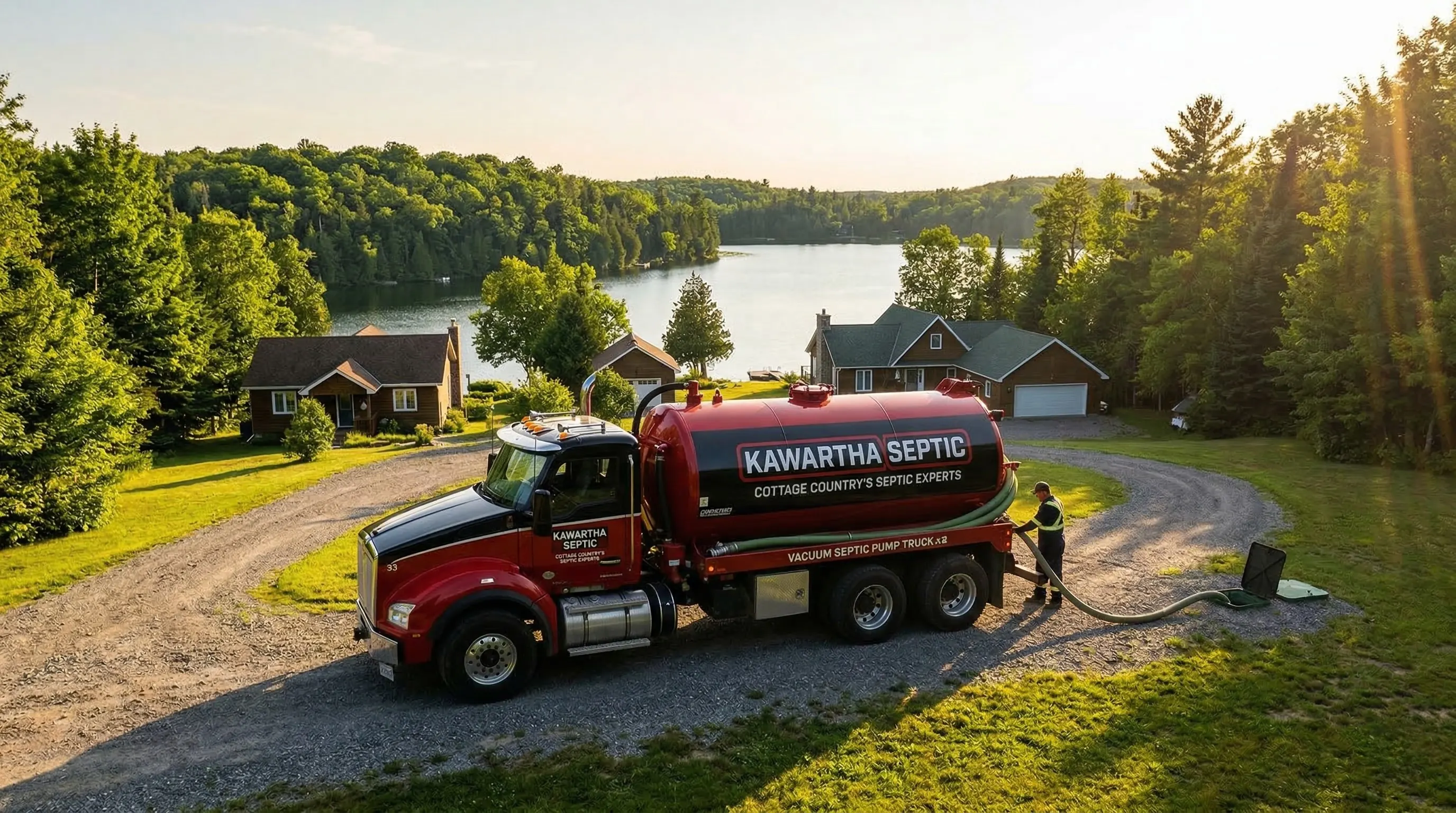
If you’ve never had your septic tank pumped before, you probably have questions. Maybe a few worries, too.
Will the truck tear up your lawn? Is there going to be a terrible smell? Do you need to be standing there the whole time? And what exactly is the technician doing back there?
A lot of homeowners around Kawartha Lakes feel the same way before their first pump-out, especially folks who recently moved from the city. The good news is that the septic pumping process is straightforward, quick, and a lot less dramatic than you’d expect.
Here’s exactly what happens during septic pumping, from the moment the truck pulls into your driveway to the moment it leaves.
The Short Version: 5 Steps, 30 to 60 Minutes
If you don’t want the full breakdown, here’s the septic pump out process in five steps:
- Locate the tank and access the lid.
- Open the lid and do a quick visual check.
- Pump out the contents using a vacuum hose from the truck.
- Inspect the tank for cracks, damage, or issues.
- Close everything up and leave the area clean.
The whole thing typically takes 30 to 60 minutes. That’s it. No heavy construction, no excavation, no chaos.
Now let’s go through each step in more detail so you know what to expect.
Step-by-Step Septic Pump-Out Process
Step 1: Locate the Tank
Before anything can happen, the technician needs to find your septic tank. If you already know where it is and the lid is accessible, this step takes about two minutes.
If you don’t know where the tank is, the tech will look for clues. There’s usually a pipe coming out of your basement or crawl space that points toward the tank’s location. In some cases, they’ll use a probe rod to find the edges underground.
If you’re not sure where yours is, our guide on how to find your septic tank walks you through a few easy methods.
A couple near Fenelon Falls had just bought their first rural property and had no idea where the tank was. The previous owners didn’t leave any records. The tech spent about 20 minutes probing the yard before finding it under a garden bed near the back fence. Once they marked the spot, every pump-out after that took half the time.
If the lid is buried, the technician may need to dig down to it. Some homeowners install risers (extensions that bring the lid up to ground level) so there’s no digging needed for future visits. It’s a small upgrade that saves time and money over the years.
Step 2: Open the Lid and Do a Quick Visual Check
Once the lid is exposed, the technician removes it and takes a first look inside. They’re checking a few things right away:
- Sludge and scum levels. How full is the tank? Is the sludge layer at the bottom thicker than expected?
- Water level. Is it where it should be, or unusually high or low?
- Obvious problems. Any signs of backup, blockage, or damage visible from the surface?
This initial check only takes a minute, but it tells the technician a lot about how the system has been performing since the last pump-out.
Step 3: Pump Out the Contents
This is the main event. The technician connects a large vacuum hose from the pump truck to the tank opening and starts removing everything inside.
The hose is typically 4 to 6 inches in diameter. It creates strong suction that pulls out the liquid, the floating scum layer, and the heavy sludge settled at the bottom. The technician moves the hose around inside the tank to make sure everything comes out, including material stuck in corners or along the walls.
During this step, you’ll hear the pump running. It’s about the same volume as a lawnmower, but it doesn’t last long. For a standard 1,000-gallon residential tank, the actual pumping takes roughly 15 to 25 minutes.
One thing that surprises first-timers: the smell is usually not nearly as bad as they expected. Yes, there’s an odour when the lid comes off, but it dissipates quickly. Most homeowners stay inside and barely notice.
Step 4: Inspect the Tank
Once the tank is empty, the technician does a proper inspection. This is one of the most valuable parts of a septic tank pump out.
With the tank empty, the tech can see the walls, floor, baffles, and pipes clearly. They’re looking for:
- Cracks or deterioration in the tank walls
- Damage to the inlet and outlet baffles
- Signs of root intrusion
- Any structural issues that could lead to bigger problems
If something doesn’t look right, they’ll let you know. Catching a small crack or a damaged baffle early can save you thousands compared to dealing with a full system failure. For more on warning signs, see our guide on signs your septic system is failing.
Step 5: Close Up and Clean Up
After the inspection, the technician replaces the lid, covers any exposed area, and makes sure the site looks the way it did when they arrived. If they had to dig to reach the lid, they’ll fill the hole back in.
You’ll usually get a quick summary of what they found, along with a written report noting tank condition, volume pumped, and any recommendations.
That’s the entire septic pumping process. Most homeowners are surprised by how simple it is.
Ready to book your first pump-out (or your next one)? Schedule online or call us at (705) 242-0330. We serve Lindsay, Bobcaygeon, Fenelon Falls, Coboconk, and all of Kawartha Lakes.
How Long Does Septic Pumping Take?
For a standard residential septic tank (750 to 1,500 gallons), the entire visit usually takes 30 to 60 minutes. Here’s how that breaks down:
- Locating and accessing the tank: 5 to 15 minutes (faster if the lid is at grade level or you’ve marked the location)
- Pumping: 15 to 25 minutes
- Inspection and close-up: 5 to 10 minutes
A few things can add time:
- Buried or hard-to-find lids. If the tech needs to dig or search, add 10 to 30 minutes.
- Larger tanks. A 1,500-gallon tank takes longer to pump than a 750-gallon one.
- Heavy sludge buildup. If the tank hasn’t been pumped in many years, thick compacted sludge slows the process.
- Access issues. Narrow driveways, gates, or long distances between the driveway and the tank can add time.
In most cases, how long septic pumping takes is well under an hour. It’s not an all-day project.
Do You Need to Be Home?
Not necessarily. If the technician can access the tank without going through a locked gate or needing directions, you don’t have to be there. Many homeowners in Kawartha Lakes leave a note with the tank location and let the crew handle it while they’re at work.
That said, being home for your first pump-out is a good idea. You can show the tech where the tank is, ask questions, and hear the inspection results firsthand. After that first visit, most people are comfortable letting the crew come and go.
One homeowner in Lindsay told us he’d been dreading the appointment for weeks and took the whole morning off work. The truck arrived at 9:15, and by 9:50 the crew was already pulling out of the driveway. He laughed about it later and said it was the shortest “appointment” he’d ever taken time off for.
What the Tech Checks During a Pump-Out
We touched on the inspection above, but it’s worth spelling out because this is where a good septic company earns its keep. During a pump-out, a thorough technician checks:
- Tank structure. Cracks, corrosion, or shifting that could cause leaks.
- Baffles. These are the interior walls that direct flow inside the tank. If the outlet baffle is missing or damaged, solids can escape into the drain field and cause serious damage.
- Inlet and outlet pipes. Are they clear? Any signs of blockage?
- Sludge depth. How much had accumulated since the last pump? This helps determine if your pumping schedule is on track or needs adjusting.
- Effluent filter (if installed). Some systems have a filter at the outlet that catches solids. It gets cleaned during the pump-out.
- Signs of groundwater intrusion. If the water level is higher than normal, groundwater may be leaking in through cracks.
This inspection is included with a standard pump-out. It’s one of the best ways to catch problems early. For more ways to keep your system healthy between visits, see our septic tank maintenance tips.
What Happens to the Waste?
Good question, and one that not enough people ask.
In Ontario, septage (the contents of your tank) must be disposed of at a facility approved by the Ministry of the Environment. Licensed haulers transport the waste to approved sites, where it’s treated before being safely returned to the environment.
This is regulated under the Ontario Building Code and Environmental Protection Act. When you hire a licensed septic company, you can be confident the waste is handled properly and legally.
Wondering what a pump-out costs in this area? Check out our breakdown of septic pumping costs in Ontario for current pricing.
Frequently Asked Questions
Will the pump truck damage my lawn?
Pump trucks are heavy, and they do need to get reasonably close to the tank. On dry ground, most trucks leave little to no trace. If the ground is soft or wet (spring thaw, heavy rain), there’s a chance of some tire marks. A good company will take care to minimize this.
Does septic pumping smell bad?
There’s a brief odour when the tank lid comes off, but it doesn’t linger. Once the lid is back on and the truck leaves, the smell is gone. You won’t notice anything inside your house.
How often should I get my tank pumped?
For most households, every 3 to 5 years is the standard recommendation. It depends on your tank size, the number of people in your home, and water usage. Our guide on how often to pump your septic tank goes into the specifics.
Can I use my toilets and sinks while the tank is being pumped?
Technically yes, but it’s better to avoid heavy water use during the pump-out. Running the dishwasher or doing laundry while the tech is pumping just adds water they need to remove. Normal use (flushing a toilet, washing hands) is fine.
You’ve Got This
Now you know exactly what happens during septic pumping, and hopefully it sounds a lot less intimidating than you imagined. The whole process is quick, routine, and something thousands of homeowners across Kawartha Lakes do every few years without a second thought.
If it’s been a while since your last pump-out, or if you’ve never had one done, now’s a great time to get it on the calendar. Regular pumping is the single most important thing you can do to protect your system and avoid costly repairs.
Give us a call at (705) 242-0330 or book online. We’ll take care of everything.